Quantum (NYSE: QTM), FalconStor (NASDAQ: FALC) and Nexsan have updated their deduplication offerings to capitalize on the growing demand for the data reduction technology. Nexsan and FalconStor have partnered on a dedupe appliance that competes with the likes of EMC’s (NYSE: EMC) Data Domain line, while Quantum — EMC’s dedupe partner before the Data Domain […]
Quantum (NYSE: QTM), FalconStor (NASDAQ: FALC) and Nexsan have updated their deduplication offerings to capitalize on the growing demand for the data reduction technology.
Nexsan and FalconStor have partnered on a dedupe appliance that competes with the likes of EMC’s (NYSE: EMC) Data Domain line, while Quantum — EMC’s dedupe partner before the Data Domain acquisition — is expanding its dedupe technology from its DXi backup appliances to primary storage with its StoreNext file system.
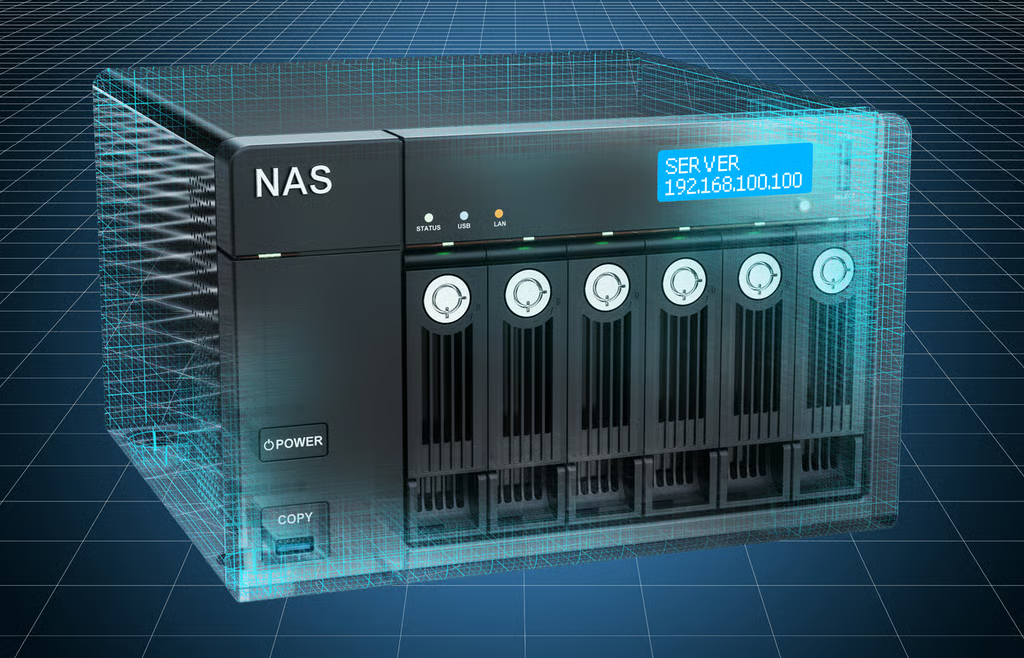
Nexsan is using the FalconStor File-Interface Deduplication System (FDS) for its DeDupe SG (“Speed with Green”) 2.0 appliance, which the company claims is “the first LAN-based deduplication system to offer high availability.”
Nexsan DeDupe SG 2.0 also includes support for Symantec’s (NASDAQ: SYMC) OpenStorage API (OST) for faster data ingestion speeds.
Nexsan offers redundant appliances for uninterrupted data access and automatic backup application failover, with backup server connections of as much as 5.4 terabytes per hour with Symantec OST.
The appliances can support up to 150 remote sites, and they also come with optional 10 Gigabit Ethernet connections.
The DeDupe SG 2.0 also uses Nexsan’s AutoMAID technology to save on power costs while maintaining performance.
Pricing starts at $49,000 for a 4TB appliance.
Quantum has updated its StorNext data management software to offer primary storage dedupe, replication, distributed data tiering, timecode-based partial file retrieval and a Web services-based management console.
StorNext 4.0 offers data deduplication natively in the file system for nearline data and multi-site environments. Quantum’s variable-length deduplication technology finds redundant data blocks across files and stores only unique data.
StorNext also offers replication from a single site or multiple branch offices to a remote location, and deduplication means customers only have to replicate unique data.
Distributed Data Mover (DDM) functionality adds performance to tiered storage and archiving, while timecode-based partial file retrieval (PFR) streamlines workflow in media asset management applications so that segments of large media files can be quickly retrieved and utilized based on timecode parameters.
And in other dedupe news this week, ExaGrid claimed to be “the first vendor to offer a complete line of high performance disk backup appliances with data deduplication at a cost that approaches tape backup systems,” with pricing starting at $43,000 for a 5TB system.
Follow Enterprise Storage Forum on Twitter
eSecurity Editor Paul Shread has covered nearly every aspect of enterprise technology in his 20+ years in IT journalism, including an award-winning series on software-defined data centers. He wrote a column on small business technology for Time.com, and covered financial markets for 10 years, from the dot-com boom and bust to the 2007-2009 financial crisis. He holds a market analyst certification.

Enterprise Storage Forum offers practical information on data storage and protection from several different perspectives: hardware, software, on-premises services and cloud services. It also includes storage security and deep looks into various storage technologies, including object storage and modern parallel file systems. ESF is an ideal website for enterprise storage admins, CTOs and storage architects to reference in order to stay informed about the latest products, services and trends in the storage industry.
Property of TechnologyAdvice. © 2026 TechnologyAdvice. All Rights Reserved
Advertiser Disclosure: Some of the products that appear on this site are from companies from which TechnologyAdvice receives compensation. This compensation may impact how and where products appear on this site including, for example, the order in which they appear. TechnologyAdvice does not include all companies or all types of products available in the marketplace.