Data Storage 2020: Trends in Data Storage Data Storage 2020: Trends in Data Storage
By Cynthia Harvey, December 19,2019
Backup Compliance for the MultiCloud Virtualized Environment
Is IT protecting the data it stores in the cloud? To an extent. Cloud providers are generally trustworthy on building in redundancy and availability for active data - but true compliance requires reliable backup.
Tiered storage offers reduced data storage costs, higher efficiency and the ability to reuse older equipment.
Storage virtualization runs on multiple storage devices and makes them appear as if they were a single storage pool, greatly increasing efficiency and manageability.
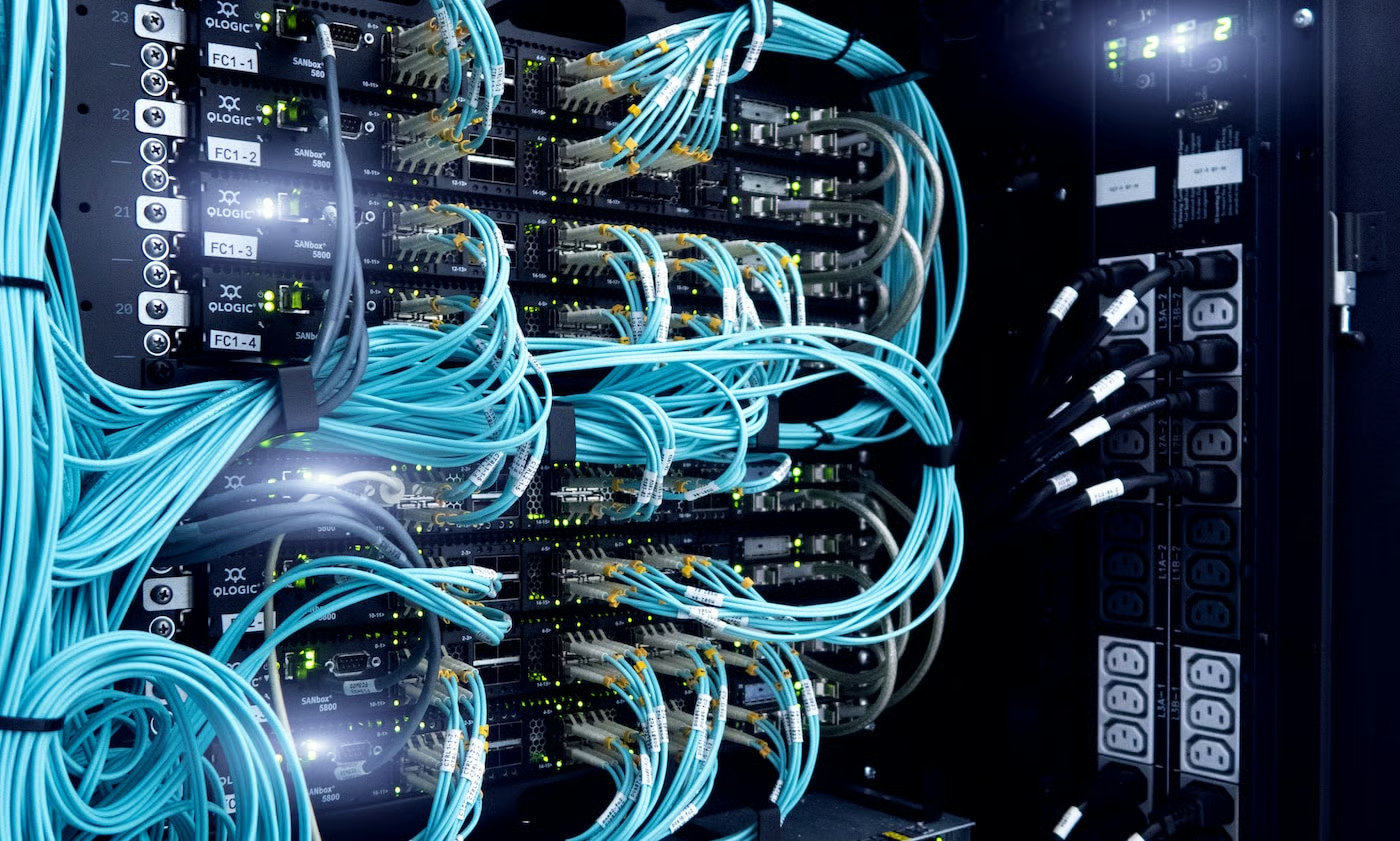
The leaders in the Fibre Channel storage market offer multiple classes of hardware that help organizations to build and enable Storage Area Networks (SAN) deployments.
What is cache memory? Learn about cache memory, how it works, and why cache is needed in a modern computer system.
Paging is a memory management function that presents storage locations to the CPU as additional memory. Segmentation is a virtual process that creates variable-sized address spaces called segments.
Memory ballooning is an effective approach to memory management in hypervisor virtualization technology, though it comes with some trade-offs.
These leading disk defragmentation tools enable you to defrag your system easily and more efficiently.
Shared memory is a technology that enables computer programs to simultaneously share memory resources for higher performance and fewer redundant data copies.
Kubernetes storage is useful to storage administrators because it enables different forms of persistent, stateful data retention within Kubernetes cluster deployments, which are increasingly popular.
Learn what Docker containers are all about, including how to enable different types of storage to support stateful application deployment.
A RAID controller is a card or chip located between the operating system and the storage drives. RAID provides data redundancy and improves drive performance.
Memory swapping makes use of storage capacity to create a swap file to extend available system resources.
Since the beginning of modern IT, the challenge of memory exhaustion has been handled by a diverse set of capabilities, usually grouped under the heading of memory management.
DIMM stands for Dual In-Line Memory Module, a type of computer memory that is natively 64 bits, enabling fast data transfer.
RAM and ROM are two types of memory crucial to the proper functioning of a computer. Learn about the differences and similarities between RAM vs. ROM.
Phase Change Memory is an emerging area of technology that offers the promise of faster speed and increased durability over existing Flash storage devices.
Disk fragmentation is a common occurrence in modern operating systems and applications as data storage is often allocated in an non-sequential approach.
Migrating data is a challenging process with some significant risks attached. It is essential to plan, execute, and test as effectively as possible.
Systems that cannot be allowed to fail require fault tolerance. Learn about the systems and technology of fault tolerance and how your business can achieve it.