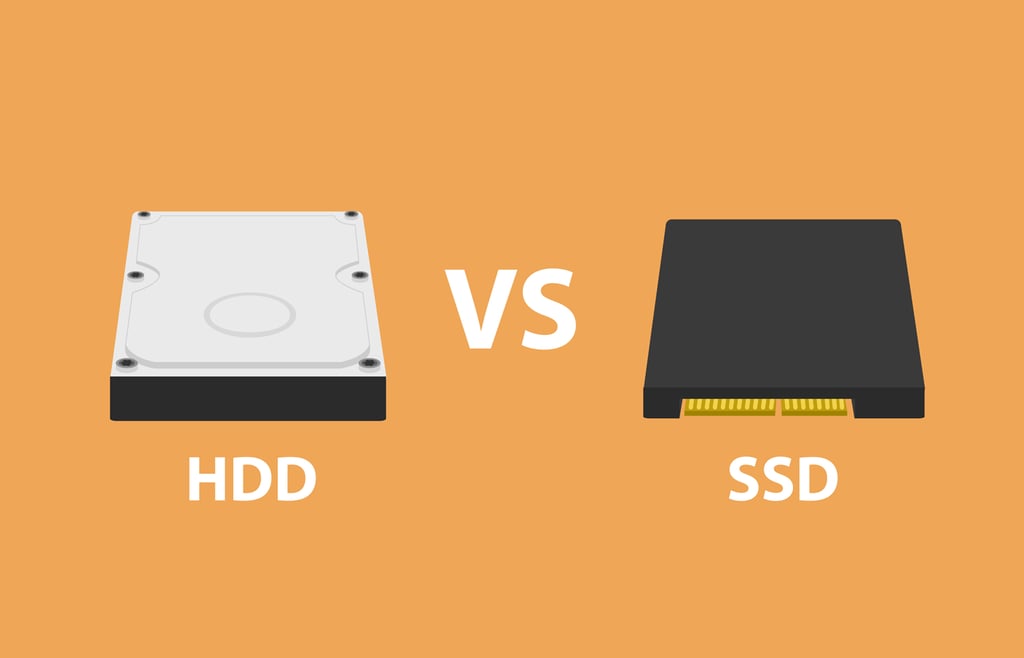
This article compares NAND and NOR types of flash storage and highlights which is better for different use cases.


Flash memory is a non-volatile, programmable, high-speed chip-based storage technology that retains data even without a constant power supply. There are two types of flash, NAND and NOR, each with different strengths and weaknesses which makes it better-suited to different uses.
NOR flash memory is typically used in cell phones, Internet of Things (IoT) devices, medical devices, and scientific instruments, while NAND is used in digital cameras, USB drives, Secure Digital (SD) memory cards, tablets, and computers. In some cases, digital devices like computers and cell phones use both NAND and NOR—for example, NAND flash in the solid state hard drive (SSD) and NOR flash in the operating system BIOS.
This article provides a high-level overview of both types of flash memory and what sets them apart.
Flash memory stores data in memory cell arrays defined by Floating Gate Metal Oxide Field Effect Transistors, which store a binary 1 or 0. Each transistor has two gates, like an electrical switch where the current flows between two points. The name NAND stands for NOT-AND, the type of logic gate it uses.
Unlike DRAM memory, it does not require a persistent power source. When the SSD or memory card is detached from a power source, metal-oxide semiconductors called floating-gate transistors (FGT) provide electrical charges to the memory cells and data remains intact.
NAND is the most popular type of flash storage memory for USB flash drives, memory cards, and solid state drives (SSDs). NAND cell arrays store between one and four bits of data.
The most common types of NAND are SLC, MLC, and TLC, which contain between one and three bits in each cell. 3D NAND, which stacks cells vertically, is also gaining ground in high-performance, high density environments.
NOR flash was the first type of flash developed. Cells on a NOR chip are arranged parallel to one another, making it efficient to read but not as fast for writes. It is most often used in cases where code will be written once and read a lot.
It can be manufactured in small chips, and is solid state, which makes it shock-proof and suitable for use in devices that might be moved around or dropped. The name stands for NOT-OR, the type of logic gate it uses.
There are two main types of NOR flash memory, parallel and serial. With parallel NOR, a memory controller uses an eight-bit or 16-bit parallel address bus to address the memory. Serial NOR, or Serial Peripheral Interface (SPI) NOR, stores data in both pages and larger sectors.
Both NOR and NAND flash memory are embedded in small electronics like cameras and smartphones, but only NAND is cost-effective and dense enough to serve in flash-based enterprise storage environments. Neither technology is new, having been developed by Toshiba in the early 1980s.
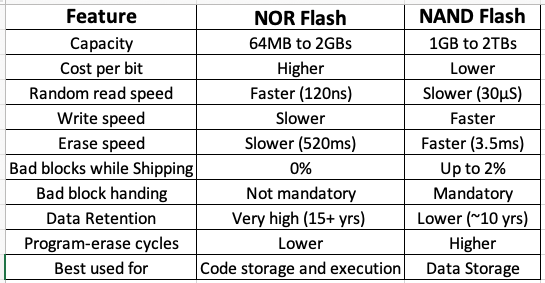
Though NAND memory continues to be the most popular type of flash memory, NOR flash memory is still valid when used in the right technological situation. Both have a place in modern devices, with significant improvements to each occurring on a roughly two-year cycle. As of mid-2023, an overabundance has driven the price of NAND microchips down significantly. In turn, the cost of SSDs using NAND flash has dropped as well, making faster, higher capacity storage more readily affordable. NOR pricing has followed a similar trend, making it a good time for businesses looking to purchase solutions built upon these technologies to act.
Don Hall is a contributing writer to Enterprise Storage Forum, where he covers data storage technology, storage hardware and software, and data networking. He worked for more than two decades as an IT Supervisor for the federal government and as IT Operations Supervisor for an IT Military Command managing programmers, cybersecurity staff, and infrastructure and networking personnel. Previously he worked as an application programmer. Don earned a B.S. in Business Information Systems from San Diego State University and has certificates in Technical Communication and web development with an emphasis in Java/Open Source. He has also had an active CompTIA Security + (ce) since 2011, and a Network +(ce) since 2015.

Enterprise Storage Forum offers practical information on data storage and protection from several different perspectives: hardware, software, on-premises services and cloud services. It also includes storage security and deep looks into various storage technologies, including object storage and modern parallel file systems. ESF is an ideal website for enterprise storage admins, CTOs and storage architects to reference in order to stay informed about the latest products, services and trends in the storage industry.
Property of TechnologyAdvice. © 2026 TechnologyAdvice. All Rights Reserved
Advertiser Disclosure: Some of the products that appear on this site are from companies from which TechnologyAdvice receives compensation. This compensation may impact how and where products appear on this site including, for example, the order in which they appear. TechnologyAdvice does not include all companies or all types of products available in the marketplace.